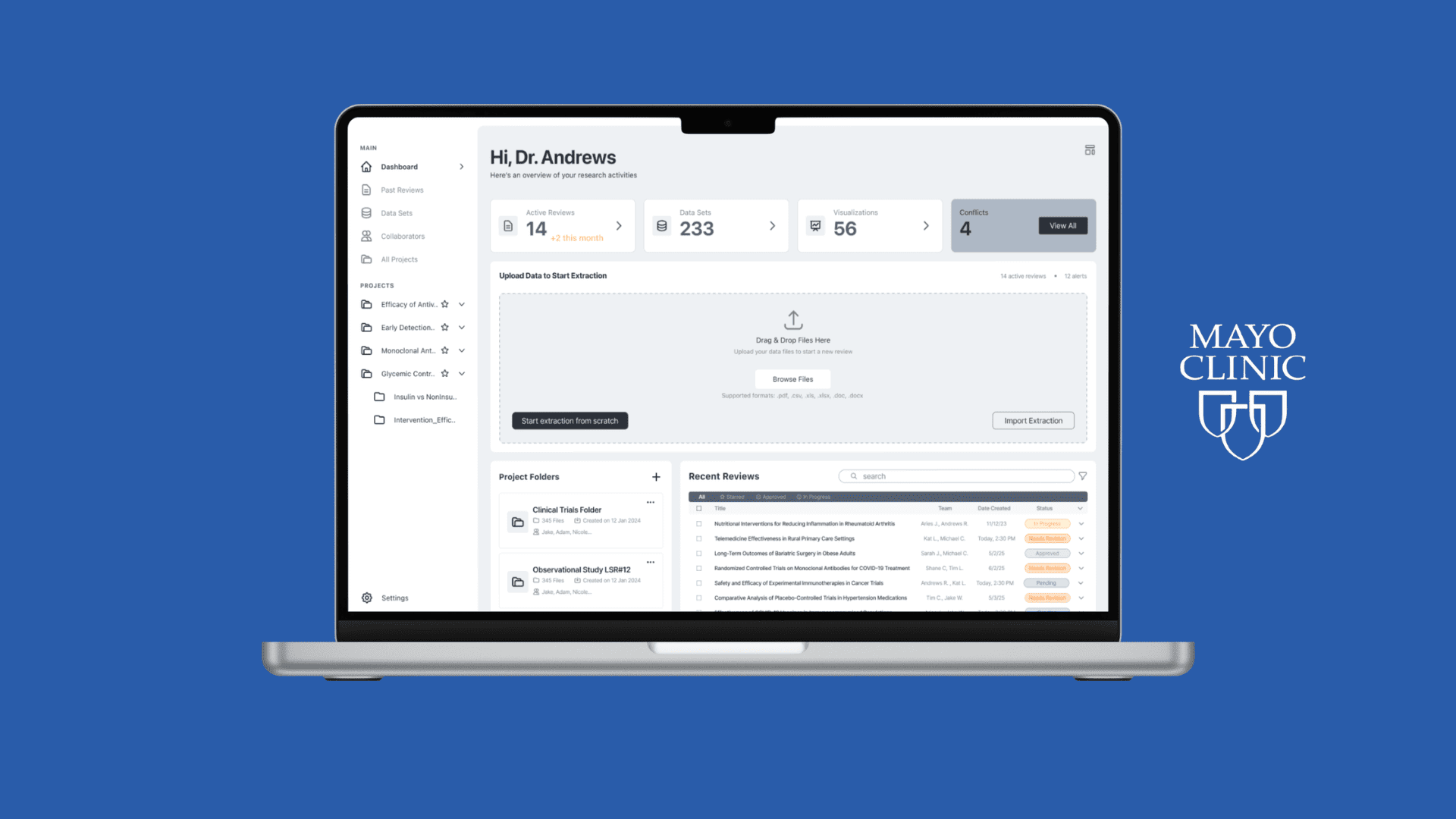
DataExtractionSystemForLivingSystematicReviews
LLMs can help automate extraction. But there was no interface that made it work for researchers. We built one.
3 big problems.
Why not just use ChatGPT? The tools exist, but the interface doesn't. That's the gap we designed for.
how we got there.
"Can we make it simpler without losing control?" If not, we cut it.
Task Flows
Version 2 cuts the ambiguity from Version 1. Every branch has an exit. Every AI step has a human fallback.
Manual.Time-consuming. Prone to error.
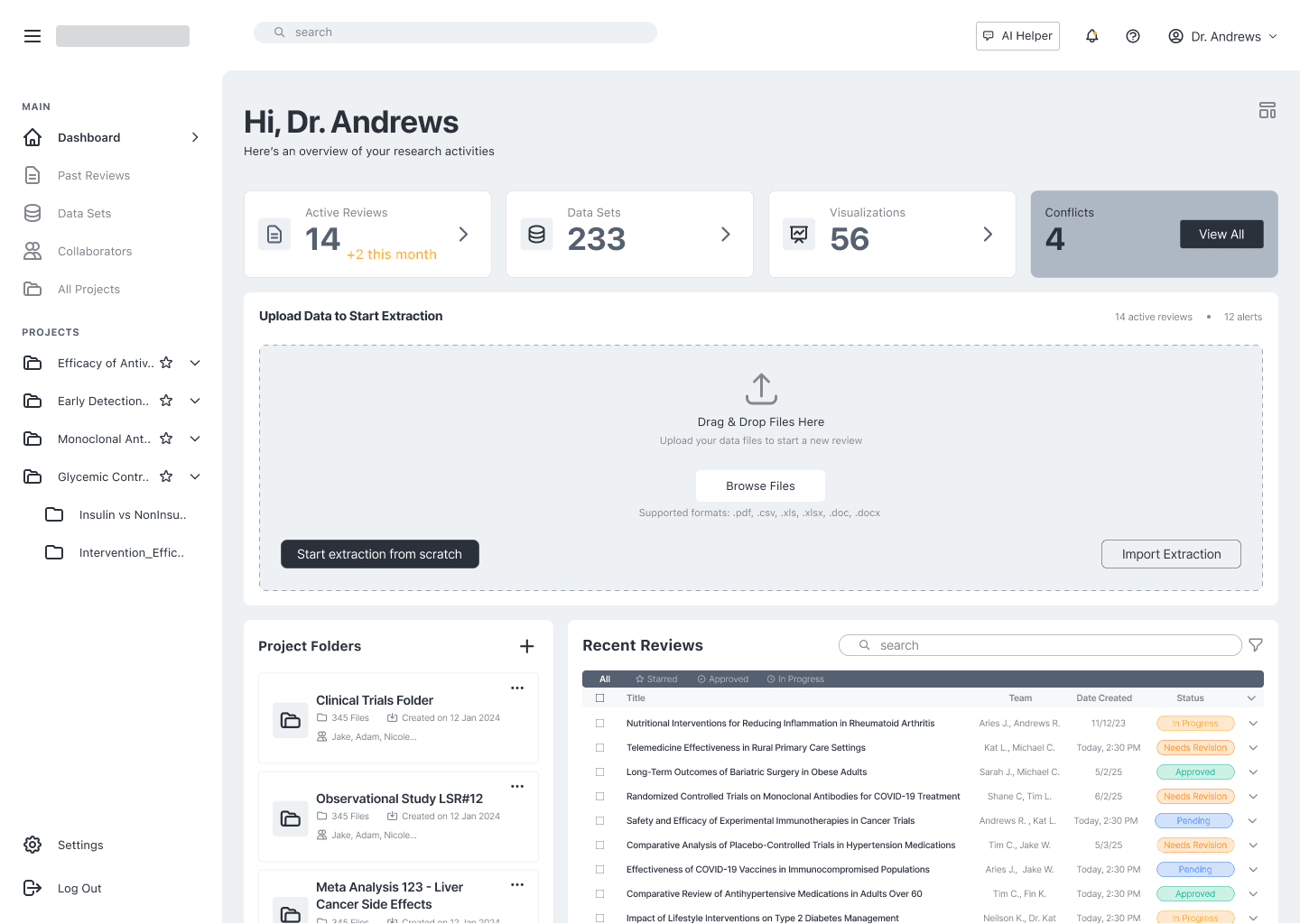
all your reviews. one scroll.
Active reviews, conflict counts, and recent work front and center. Upload to start an extraction immediately.
Manual.Time-consuming. Prone to error.
all your reviews. one scroll.
Active reviews, conflict counts, and recent work front and center. Upload to start an extraction immediately.
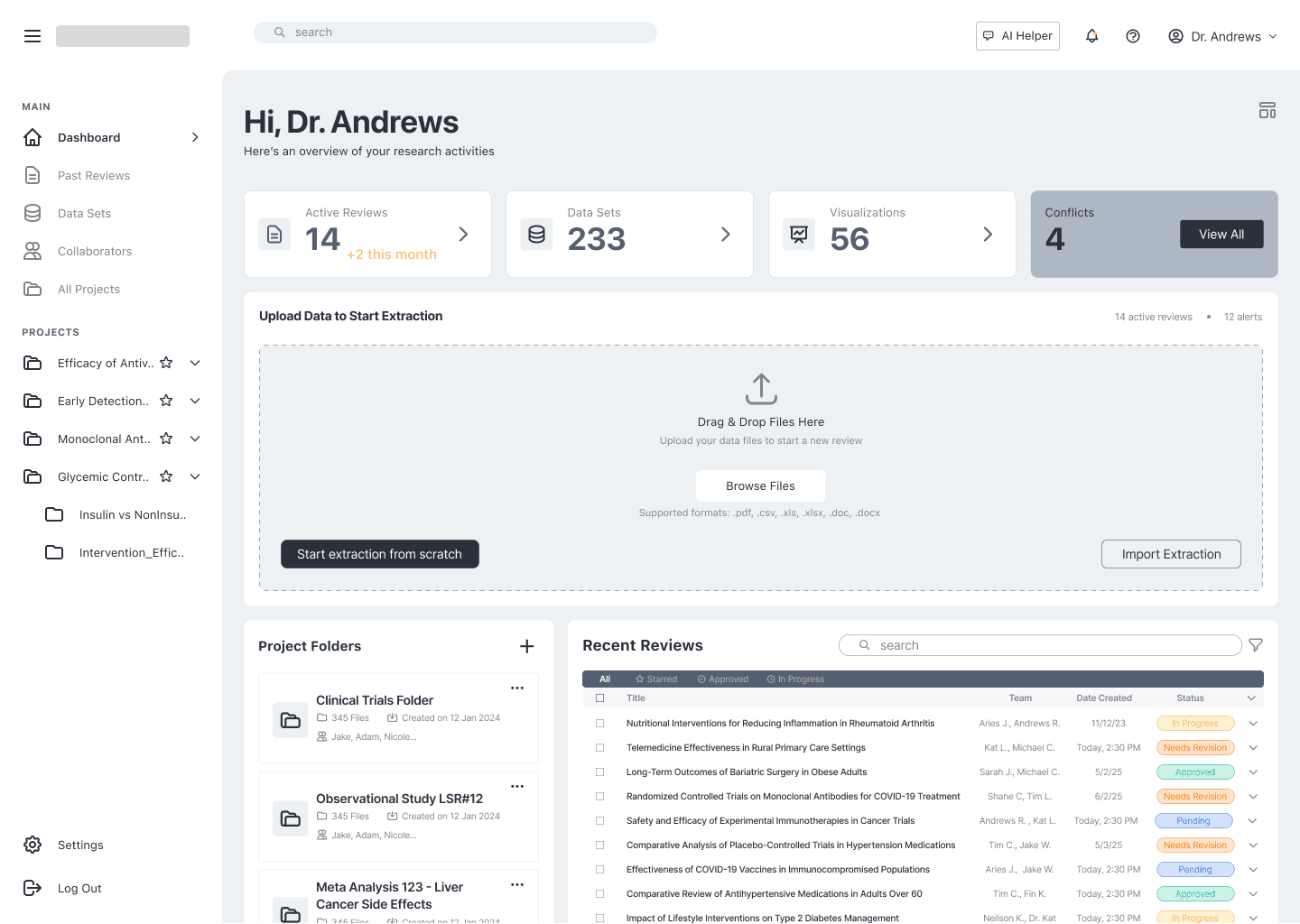
The FinalProduct.
How did designing for AI change the way I think about UX?
Working on this project pushed me to rethink the role of a designer in systems where AI is not just a tool but a collaborator. I came in assuming AI would simply automate the repetitive work. What I found was more nuanced.
Embedding LLM capabilities into a workflow only works when users can understand, trust, and know when to override what the AI produces. That meant designing for transparency at every step. Confidence scores, conflict flags, source traceability, these were the design, not features bolted on at the end.
This project made me a more careful systems thinker, a stronger advocate for progressive disclosure, and much more intentional about where human judgment should never be replaced.